By Patrick Gill, Senior Vice President & General Manager, Insurance & Commercial Solutions
For years, conversations about operational efficiency in insurance have focused on a single objective: reducing expense. Automate a process. Eliminate a manual task. Shorten cycle times. Remove unnecessary steps.
Those are all worthwhile goals. But they miss the bigger opportunity. The next era of operational efficiency is not simply about working faster. It is about making better decisions because you have better information before work ever begins. That distinction matters.
Insurance has historically operated in a world where too many decisions were made only after someone arrived at a property. Adjusters drove to a home to understand its condition. Contractors climbed onto roofs to measure them. Claims managers waited for inspections before deciding how to allocate resources. Catastrophe teams often reacted only after losses started flooding into the organization.
The result was not just slower claims. It was uncertainty. Multiple site visits. Duplicate work. Inconsistent decisions. Expensive resources deployed where they were not needed while higher-priority claims waited.
Artificial intelligence is changing that equation. Not because AI replaces adjusters or claims professionals. It does not. AI creates operational efficiency because it allows insurers to know dramatically more before anyone leaves the office. That is a fundamentally different way to think about claims operations.
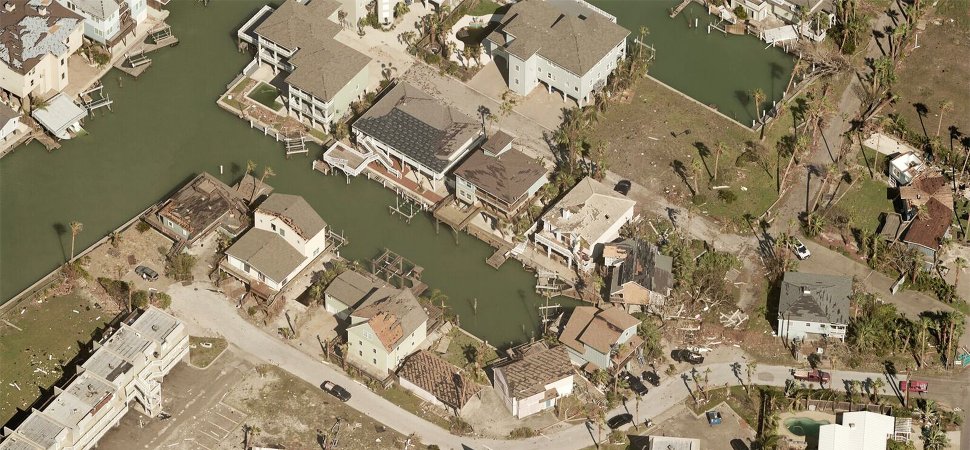
At Eagleview, we have spent more than two decades helping insurers understand properties through aerial imagery and property intelligence.
At first, that meant solving a very practical problem.
Roof measurements were often disputed. Adjusters, contractors and homeowners could all arrive at different answers for something as straightforward as the size of a roof. Those disagreements introduced friction into nearly every roofing claim.
Providing objective, independent measurements removed that uncertainty. Everyone could work from the same set of facts. That alone created enormous operational efficiencies.
But measurements were really just the beginning.
Today, insurers have access to an entirely different level of property intelligence: roof condition, roof age, structural attributes, historical imagery, property changes over time, weather intelligence and AI-powered change detection.
Each new layer of information answers another question before someone has to ask it in the field.
Our internal mantra has become simple:
How much better can you operate if you know more before you go?
As it turns out, the answer is: substantially better.
AI Changes the Economics of Claims Operations
One of the biggest misconceptions about artificial intelligence is that it is primarily about automation.
The real opportunity is intelligence.
Claims organizations already employ experienced professionals who know how to make difficult decisions. Their challenge is not capability. It is visibility.
AI allows carriers to bring together massive volumes of disparate information that would previously have required weeks of data science work and make it available in minutes through natural language queries.
Instead of searching through disconnected systems, claims leaders can ask straightforward questions: Which older roofs are located within yesterday's hail path? Which insured properties already showed signs of deterioration before the storm? Which claims should be prioritized? Where should experienced adjusters be deployed first?
These are not theoretical capabilities. They are practical decisions that directly influence claim severity, customer satisfaction and operating expense.
Operational efficiency is not simply about processing claims faster. It is about ensuring the right claim receives the right attention from the right resource at the right time.
AI makes that possible.
Operational Efficiency Starts Before the First Claim Is Filed
Perhaps the biggest shift AI enables is moving operational planning ahead of catastrophe response. Traditionally, insurers began organizing once the claims arrived. But what if you already understood your exposure before the storm made landfall?
Consider a hurricane forecast to impact thousands of insured properties. An insurer can now combine weather projections with detailed property intelligence across its portfolio to understand which policyholders appear most vulnerable including those with older roofs, properties already showing signs of deterioration, and structures with characteristics associated with higher potential damage.
Instead of preparing generically for a catastrophe, carriers can prepare specifically. Claims staffing can be adjusted. Independent adjusters can be positioned strategically. Customer communications can begin earlier. Resources can be allocated before demand peaks rather than after. This is operational efficiency at a completely different level. It is no longer reacting efficiently. It is preparing intelligently.
After the Storm, AI Helps Prioritize What Matters Most
Once a large-scale weather event occurs, insurers immediately face another challenge. Thousands - or tens of thousands - of potential claims. The question is not simply how quickly claims can be processed. It is how intelligently they can be prioritized. Not every damaged property carries the same level of urgency.
By combining post-event weather intelligence with property-specific historical information, AI can help insurers rapidly analyze their policies in force to identify which properties are most likely to require immediate attention.
Imagine evaluating an entire portfolio following a severe hail event. Rather than treating every claim equally, insurers can identify properties that combine several meaningful indicators such as older roofing systems, poor historical roof condition, storm intensity, and property characteristics associated with a higher likelihood of significant loss.
That allows claims organizations to build smarter workflows almost immediately. Experienced adjusters can focus where they are needed most. Lower-complexity claims can move through streamlined processes. Customer expectations can be managed more proactively. The result is not simply faster claims handling. It is better resource utilization across the entire operation.
Historical Property Intelligence Changes Portfolio Management
One of the most powerful aspects of aerial imagery is that it is not just a snapshot in time. It creates history.
When properties are observed repeatedly over many years, insurers gain something the industry has rarely possessed at scale: visibility into how properties evolve:
Roofs age
Materials deteriorate
Repairs occur
Features are added
Conditions improve - or decline
Historically, understanding those changes across hundreds of thousands or millions of insured properties would have been virtually impossible.
AI changes that.
By analyzing historical roof conditions across an insurer's portfolio, carriers can better understand future financial obligations before losses occur. Patterns begin to emerge. Entire segments of the portfolio may contain aging roofs nearing replacement cycles. Specific geographic regions may exhibit accelerated deterioration because of weather exposure. Property characteristics associated with future claims become increasingly visible.
Rather than relying solely on historical loss ratios, insurers can begin incorporating actual property condition into portfolio management.
That is operational efficiency at the strategic level:
Better forecasting.
Better reserving.
Better planning.
Better capital allocation.
Helping Homeowners Become Part of the Solution
Operational efficiency is not only about improving insurer workflows. Sometimes the greatest efficiencies come from preventing claims altogether. Individual property risk analysis gives insurers an opportunity to engage homeowners long before damage occurs.
AI-powered property intelligence can identify maintenance concerns that homeowners may never notice from the ground:
Roof deterioration
Tree overhang
Changing property conditions
Emerging maintenance issues
Providing homeowners with actionable information helps them better understand their property's condition and make informed maintenance decisions before relatively minor issues become significant losses.
Everyone benefits.
Homeowners reduce the likelihood of expensive damage. Insurers reduce avoidable claims. Claims organizations spend more time handling unavoidable losses instead of preventable ones. Operational efficiency is not just about processing claims more effectively.
It is about creating fewer claims that require processing in the first place.
AI Makes Previously Impossible Questions Easy to Answer
One of the most exciting developments is not simply the availability of more data. It is accessibility. Historically, answering complex operational questions required specialized analysts, multiple databases and lengthy projects. A claims executive might have had an excellent idea but lacked an efficient way to validate it.
Today, agentic AI changes that experience.
Questions that once represented weeks of analytical work can increasingly be answered in minutes through conversational interfaces. That fundamentally changes decision-making. Instead of waiting for reports, leaders can explore scenarios interactively. They can test assumptions. Refine workflows. Adjust catastrophe plans. Optimize staffing. Continuously improve operations.
The technology does not replace expertise. It amplifies it.
For decades, insurance has relied on static snapshots of risk. Applications captured a moment. Inspections captured another. Claims documented yet another. Everything in between remained largely invisible.
But properties do not stand still. Roofs age. Vegetation grows. Pools appear. Tree overhang changes. Maintenance occurs. Storms leave cumulative effects.
Artificial intelligence, combined with continually refreshed imagery and property intelligence, enables insurers to understand those changes at scale. Perhaps even more importantly, AI can now detect those changes automatically. Humans no longer need to compare images side by side to identify meaningful differences. Algorithms can identify change across millions of properties simultaneously and surface the insights that matter.
That intelligence can flow directly into underwriting, catastrophe planning, claims operations and customer engagement. Instead of reacting to change, insurers can begin managing it.
The Future of Operational Efficiency
Operational efficiency has always been important. But AI changes both the definition and the opportunity. Efficiency is no longer measured solely by lower costs or shorter cycle times. It is measured by better decisions made earlier. Knowing which claims deserve immediate attention. Understanding portfolio exposure before catastrophe strikes. Forecasting financial obligations using historical property intelligence. Helping homeowners reduce losses before they happen.
These are not isolated improvements. They are connected capabilities that fundamentally change how insurance organizations operate. The common thread is not automation. It is knowledge. Because every time an insurer knows more before making a decision, unnecessary work disappears. Resources are deployed more effectively. Customers receive faster service. Claims professionals spend more time applying expertise and less time gathering information.
That is where artificial intelligence delivers its greatest value. Not by replacing people. By ensuring that every person starts with better information than ever before.
For insurers, operational efficiency has always been about eliminating waste. AI now offers something even more valuable. The ability to eliminate uncertainty. And when uncertainty begins to disappear, better outcomes follow - for insurers, for claims professionals and, ultimately, for policyholders.